

What Happens When Strength Athletes Switch Gears
Fitness competitions like Hyrox and Apex are drawing strength athletes who’ve long trained for other goals. What does it take to make the shift?

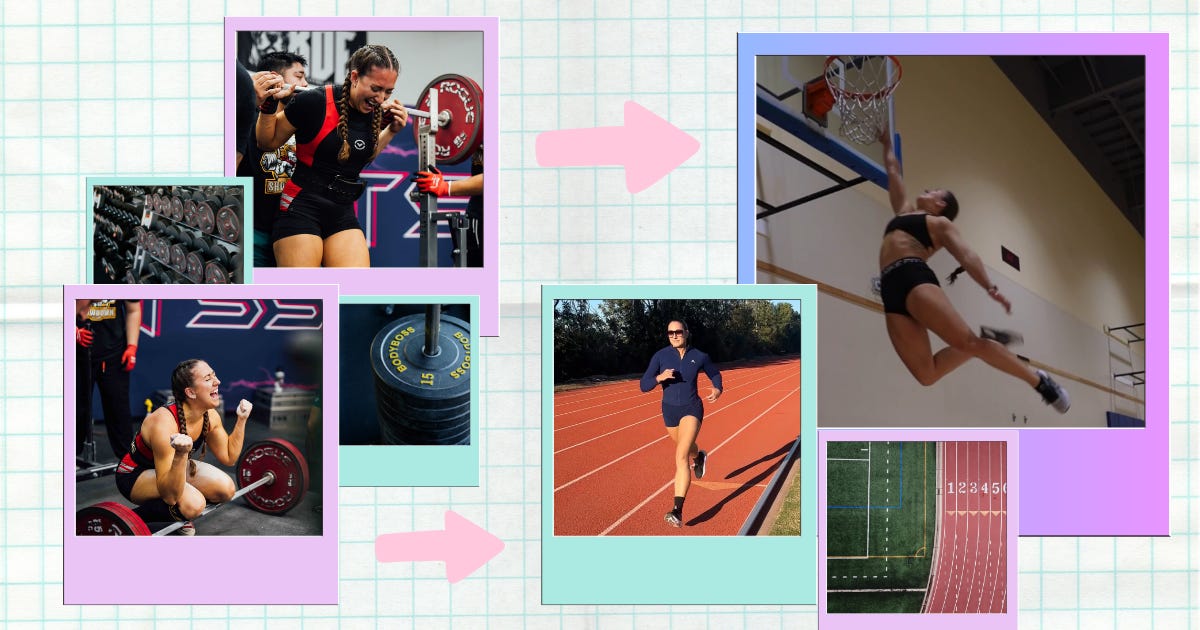
Earlier this year, bodybuilder Dana Linn Bailey competed in her first Hyrox. Training for the endurance fitness event felt like a return to her roots as a college soccer player, she said on YouTube. She’s planning to compete in more.
Meanwhile, calisthenics athlete and bodybuilder Taylor Mei, known for her viral calisthenics flows, has taken a step back from bodybuilding to focus more on functional training. She’s doing her first Hyrox in New York City in June and planning to run her first marathon and another Hyrox in the fall — despite hating running. On her YouTube channel, she said she made this shift to test her discipline. She wants to see “if I can do something and stay disciplined when I hate it.”
Both are part of a trend of strength athletes (who are also fitfluencers) switching up their training to chase entirely different goals.
What does it take to go from heavy lifting or muscle-development work to training for endurance, speed, and agility?
To find out, I talked to Erin “Airin” Avery, PhD1, a powerlifter and bodybuilder who runs She Lifts Academy and a few months ago shifted her training to prep for Apex, an NFL-combine-type fitness competition.
Avery started lifting as a college volleyball player at the State University of New York at Oneonta. She wanted to improve her strength, speed, and vertical jump to increase her odds of getting playing time, so she began experimenting in the weight room. “I ended up liking the gym so much … that I wanted to do more,” she says. She started working with a bodybuilding coach and, her sophomore year, competed in bodybuilding for the first time.
When she moved to Los Angeles for graduate school at UCLA, she kept training and competing as a bodybuilder, but she noticed other women at the gym who were lifting heavy.
“I was watching all these women deadlift two plates or squat two plates, and I was like, ‘Wow, that’s badass,’” she says.
Powerlifting seemed like the perfect way to shift her mindset away from aesthetics in her bodybuilding off-season, when her body naturally held onto more mass. Soon, Avery was splitting her years between bodybuilding training and powerlifting training. At her last bodybuilding competition in 2023, the National Physique Committee (NPC) Junior Nationals, she placed fourth. This past October at the Hidden Strength Showdown, she hit her first nationally qualifying total for USA Powerlifting, moving 892.8 pounds between all three lifts and setting personal records for both squat and deadlift.
“I hit massive lifts that I never, ever thought were possible,” she says. “I broke into the 400s [on deadlift] for the first time ever. It’s a life milestone that I’ve always wanted to accomplish.”
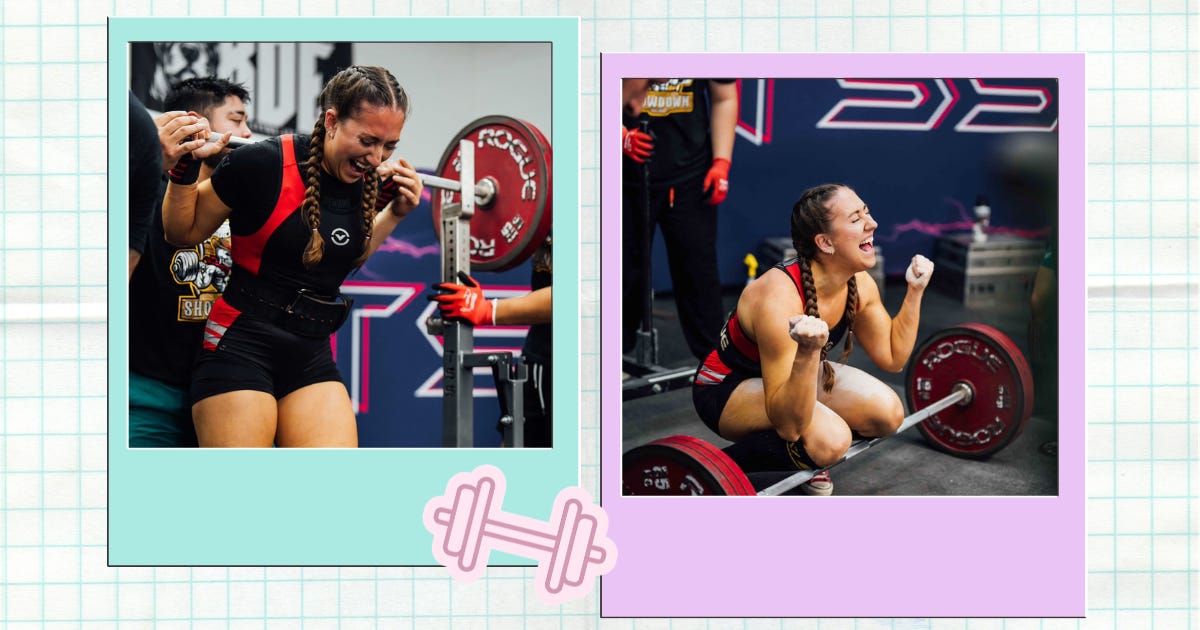
Coming out of that competition, Avery wanted to do something new in her training.
She missed the fuller breadth of athleticism and realized how much she’d been neglecting her cardiovascular fitness. Apex, with its variety of sprint, run, jump, and strength events, caught her eye. Here was an opportunity to lean into her volleyball background and express a more dynamic physicality.
But switching to a whole new style of training wasn’t easy:
1. Ramping up for hard contact with the ground
Avery couldn’t remember the last time she’d run a mile. Her body wasn’t used to hard impact. She had some flare-ups with her shin from adding too much volume and intensity too soon.
“I have had to be very careful about easing into it and not doing too much too quickly,” she says.
To lower the amount of hard impact in a week, she sprints on Mondays and Fridays and has mixed in the assault bike for some of her cardio training.
2. Lifting lower numbers
Apex has two lifting events: as many reps as possible of bench press (115 lbs) and trap bar deadlift (275 lbs). When Avery trains for powerlifting, she lifts way heavier weights but in the low-rep range. For Apex, she’s lowered her training weights so she can do more reps, and switched from low-bar squat to high-bar squat to emphasize her quadriceps more. Changing her back squat has limited how much weight she can move.
“I have a very short torso and very long femurs, so I love squatting low-bar because it’s a lift that’s meant for my anatomy,” she says. “High-bar, not so much. My ankle mobility really has to be on point. … It’s just not as comfortable as low-bar.”
With the low-bar squat, she could move 305 for three reps at a time. With high-bar, 225 became a challenge. That lower weight hurt her ego as a powerlifter and required another mental shift.
3. Learning new skills
To support explosiveness and power in the 40-yard dash, vertical jump, and Apex’s overhead med ball toss, Avery decided to do some Olympic weightlifting and was immediately humbled.
“Olympic lifts are so incredibly technical, and it’s not something that you’re going to nail within a few weeks,” she says. Snatching 90 pounds has been a struggle. “It’s fun when it goes well and you have a good day of Olympic lifting, but when you’re fatigued, it’s just rough.”
4. Finding the right place to train
The variety of events she’s training for has sent Avery looking for different places to work out. She ended up buying a women’s Olympic weightlifting barbell (designed with a narrower bar for smaller hands) because she was struggling to find a gym that, first, had one and, second, had one that wasn’t beaten up. She also spent months looking for a track to train at, finally finding one on a university campus that was open to the public.
“Commercial gyms are not built for this style of training,” she says. “They don’t have places where you can go sprint on the turf. Usually their turf is like 10 yards, if that. … I have like five different gym memberships right now, because I’ll do one workout at this gym because it has this equipment or one workout at this gym because it has turf.”
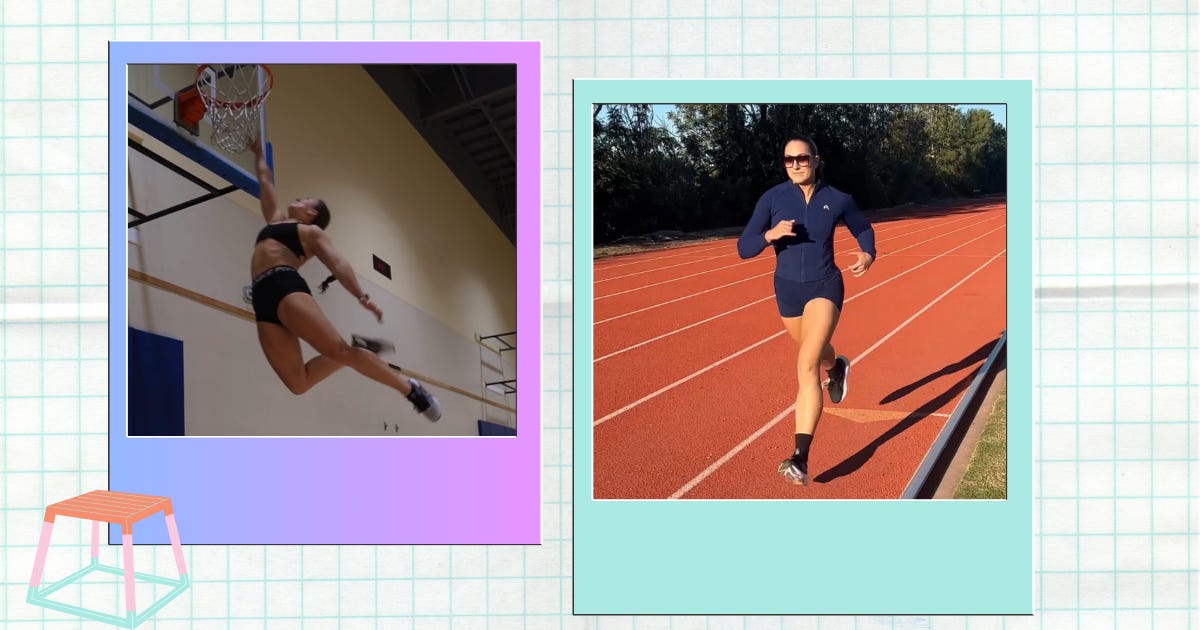
But the challenges have also come with upsides.
For the first time in years, she’s been experiencing newbie gains, seeing progress nearly every week, especially in her sprint speeds.
She has more energy than she does when training for powerlifting. This could be due to improved cardio fitness or less overall fatigue because she’s not lifting as heavy. “I have more energy throughout the day to just do normal tasks,” she says.
And she’s been enjoying not being stuck in the gym all the time, despite training more throughout the week.
“I love this training style,” she says. “It’s so fun. You get to be out of doors and express your strength on the field.”
Previously in Women’s Barbell Club
ICYMI: Olympic Weightlifting Tips from Gold Medalist Olivia Reeves

This article was originally published in our Guide to 2024 Olympic Women’s Weightlifting. It’s been updated to reflect the athlete’s wins at the 2024 Paris Olympics and the 2024 IWF World Weightlifting Championships.

Meet the 52-year-old who makes benching 300 pounds look easy.

Donovan Thompson’s Instagram is filled with photos of his wife, the world-renowned powerlifter and multiple world record holder Jen Thompson, sleeping. She’s sleeping in the front seat, in the back seat, on planes, on a shuttle, at sporting events, and often in t…
Recommended
What We Lost When We Lost Self Magazine (Mother Jones) – RIP to Self Magazine, a publication I frequently linked out to in this recommendations section. Self was one of the few women’s publications with legit research-backed fitness articles. If you were a Self reader, I’d love to hear from you about what you’ll miss most about the magazine. Leave a comment or, if you’re subscribed, send me an email.
The 82-Year-Old Jump Rope Queen of Beverly Hills (New York Times)
Cynthia Erivo is Defying Gravity. This Time on the Roads (Run)
VIDEO: Bobbi Gibb, the first woman to run the Boston Marathon, is honored with a new statue (Boston Globe)
“Airin” is a nickname from her volleyball years because of how high she could jump.
It probably does depend on the person, but I think because these athletes have so much experience with training in general and they understand why they're doing what they're doing, they probably have some sort of mental advantage. And the fact that they decided to make the change themselves. It would be different if a coach simply handed down a way different program without any explanation or any new set of goals.
The Rogue challenges sound fun! And I'm with you on anything with a free T-shirt. I need to start paying attention to those.
This was great! I loved how you pointed out the mindset shifts that are necessary when you switch up your training. When your identity and ego are tied up in a certain workout style, it can be painful to make a change, but if you can manage it, you access so many more possibilities, and that's essential for making fitness a permanent part of your lifestyle. I'd love to know if elite athletes are more prepared for those mindset shifts than average people because they're used to mental toughness, or if it's harder because they've previously been so committed to certain training styles. But I guess that probably depends on the person.
In regards to the poll, my answer would be all the above. Haha I'm doing a 5K in August, and I've done several races before but I haven't done much running this past year. I've also been looking at some of the Rogue challenges. They have one where you run a 5k and then hit the bench with 75% of your body weight. Each rep deducts ten seconds off your 5k time. And then you get a t-shirt, which really sweetens the deal for any competition in my book haha